Severe Traffic Accident: Besides Calling the Police, Prepare These 3 Insurance Records Immediately
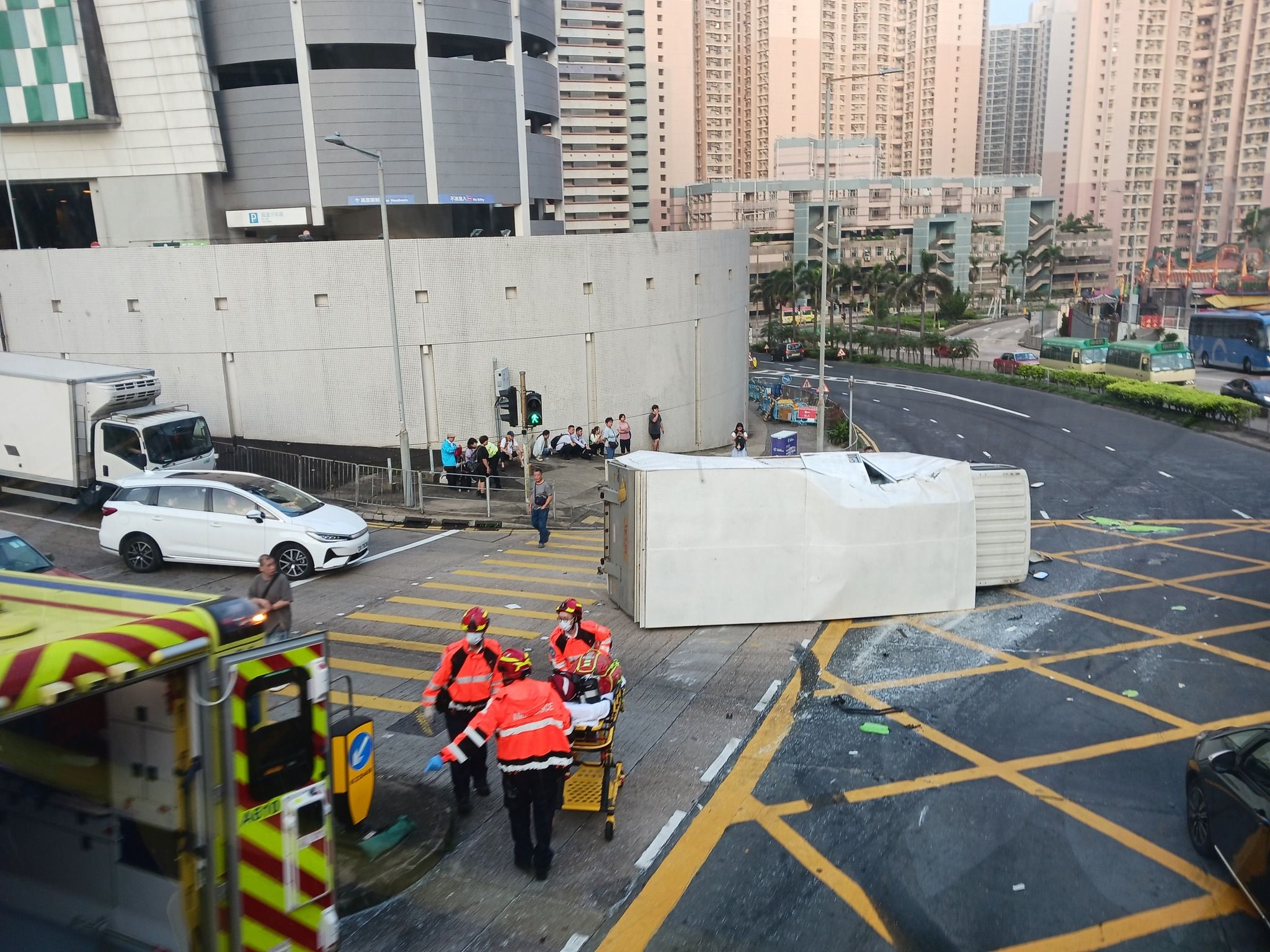
💡 Summary: A severe collision between a truck and a KMB bus on Po Lam Road in Sau Mau Ping reminds us once again: unpredictability often strikes during the most ordinary commutes. When an injured loved one is rushed to the emergency room, families face not only medical uncertainties but also time-critical "financial decisions". This article outlines the 3 key policies (Medical, Accident, Life) you must instantly grasp during a sudden accident, and explores how digital tools eliminate information blind spots, preventing you from missing the golden window to transfer to a private hospital for optimal treatment simply because you "couldn't find the policy".
Menu
Recently, a terrifying traffic accident occurred on Po Lam Road in Sau Mau Ping. A truck collided with a fully loaded KMB bus and overturned in the middle of the road, resulting in 10 people—including both drivers—being injured and hospitalized.
Such breaking news happens every day, but most people read it and move on, rarely pausing to consider a cruel question: "If it were me or my family in that ambulance today, are we ready for the decisions waiting for us in the emergency room?"
When a loved one is involved in a severe car crash and rushed to a public hospital's Accident & Emergency (A&E) department, families usually plunge into extreme panic and chaos after receiving the call from the police or hospital. However, during the golden hour of rescue, families must make a series of critical medical decisions on behalf of the injured. The confidence to make these decisions stems directly from whether you can instantly access the following 3 policy records.
3 Key Policies in the Emergency Room
1. Medical Insurance: The "Pass" for Hospital Transfer
Public A&E departments provide the most immediate life support and first aid for accident victims. But once the patient's condition stabilizes slightly, public hospitals often require long waiting periods for orthopedic surgeries, intensive care, or specialist follow-ups. At this point, families face their first major choice: "Can we afford to transfer them to a private hospital for immediate surgery?" You must instantly know the injured person's medical insurance ward class (ward, semi-private, or private room), the annual coverage limit, and whether there is a Deductible. Only with clear knowledge of these numbers can families decisively sign the transfer consent form, securing the best and most timely medical resources.
2. Personal Accident Insurance: "Cash Flow" for Hidden Expenses
Traffic accidents usually entail many non-hospitalization-related extended expenses, such as post-discharge long-term physiotherapy, Chinese bone-setting, or the need to purchase medical equipment like wheelchairs. Accident insurance typically provides reimbursement for outpatient claims, and some plans feature a "Hospital Cash" allowance, paying out a lump sum based on the number of days hospitalized. Knowing these records allows families to confidently hire private nurses or offset the short-term income loss caused by the injured person's suspension from work.
3. Life / Critical Illness Insurance: The Family's "Safety Net"
In the worst-case scenario (e.g., the injured falls into a coma or is admitted to the ICU), a family may instantly lose its primary breadwinner. At this juncture, clarifying the coverage amounts of Life and Critical Illness insurance can significantly stabilize the family's anxiety. It ensures that monthly mortgage payments and children's tuition fees are not immediately halted, allowing the partner to focus entirely on caregiving without breaking down over next month's bills.
Technology Fills the Void: Don't Let "Missing Documents" Become an ER Nightmare
Outside the emergency room, no one has the time to rush home and rummage through dusty drawers for an insurance contract, let alone reach an insurance broker at 3:00 AM.
In the face of a sudden accident, information "Accessibility" determines the success of your defense. Designed specifically for Hong Kong families, the digital policy management tool InsurVault significantly resolves this life-or-death information fragmentation:
- Digitize Physical Contracts for Pocket-Sized Confidence: Safely upload your family's medical and accident policies directly to InsurVault in PDF or image format. When standing in the ER, simply open your mobile dashboard to see coverage amounts and ward class limits at a glance. You can even instantly review the original contract's claim terms, providing precise data support for hospital transfer decisions.
- One-Click Emergency Contacts: The system consolidates the designated claim contact or broker's phone number for each policy, preventing families from running around like headless flies during the chaos.
- Transparent Daily Handover, A Lifeline in Emergencies: Through the app's "Family Sharing" feature, you can sync this organized safety net with your spouse while everything is peaceful. This represents the highest level of commitment—maximizing the certainty that when a crisis hits, your partner can instantly grasp all available resources.
Accidents cannot be predicted, but our protective net for our families can be proactively deployed. Download the InsurVault app today and spend 10 minutes uploading and organizing these 3 key policies for yourself and your partner. Leave the tedious paperwork to technology, ensuring that your love and responsibility remain clear and traceable even in the most critical moments.
Frequently Asked Questions (Traffic Accident Claims & Policy Management)
In a traffic accident, should I claim my own medical insurance first, or pursue the at-fault driver's third-party liability insurance?
This is the most common myth encountered in the ER. The standard professional practice in the industry is: to avoid delaying treatment, the injured party should first utilize their own "Medical Insurance" or "Accident Insurance" to cover private hospital surgery and hospitalization fees. After recovery, you can file a Personal Injury Claim against the at-fault driver and their insurance company through a lawyer. Once you successfully recover compensation from the at-fault party, your insurance company will usually exercise its right of "Subrogation," requiring you to refund the medical expenses they previously advanced. Therefore, grasping your own policy limits is priority number one.
If the injured person falls into a coma, can family members process the insurance claims on their behalf?
This depends on the policy's permission settings. If the injured adult is the sole "Policyholder" of the contract, family members may face administrative difficulties directly processing claims without authorization or an Enduring Power of Attorney (EPA). However, the first priority is being "informed." If family members have obtained policy copies and broker contact details in advance through the InsurVault system, they can immediately notify the insurance company to file a record and confirm the required medical documents for subsequent claims (like the attending physician's report), preparing for the formal claim down the line.
If the original physical policy is lost or damaged in the car crash, can I still make a claim?
Yes. Modern insurance claims are highly digitized, and the loss of the original physical policy does not invalidate your coverage. As long as you can provide the policy number and identification documents, the insurance company can verify your identity and process the claim. This highlights the importance of utilizing the InsurVault app early on to upload your policy contracts as PDF backups. A secure digital copy is enough to save you the lengthy administrative time of applying for a physical replacement during a critical emergency.
Expert Claim Tip: Don't Forget the "Police Report Number (RN)"
Amidst the chaos of the emergency room, besides checking InsurVault for your policies, never forget a crucial administrative step: ask the investigating police officer for the "Police Report Number (RN)" or case number. In Hong Kong's claims practice, whether you are claiming medical or accident insurance, as long as a traffic accident is involved, the insurance company will absolutely require police records to verify the course of events. Taking a photo of this RN along with your ER triage record and uploading it immediately to the policy notes in InsurVault will save you immense administrative hassle when getting your claim approved later.
Disclaimer: The traffic accident news cited in this article is for educational and background reference only and does not constitute any form of legal, medical, claims, or financial advice. InsurVault is a digital policy management technology platform, not a licensed law firm, medical institution, or insurance intermediary. Regarding specific accident claim procedures, hospital transfer medical decisions, and policy term interpretations, it is recommended to seek independent advice from attending physicians, professional licensed financial advisors, and lawyers before making any decisions. For inquiries, please email contactus@insurvault.com.hk.
Ready to build a safety net for your family?
Download the InsurVault App today and easily manage your family's policies all in one place. Make love traceable.
Download for FREE