【Insurance Regulations】Fatal Crash from P-Plate Wrong-Way Driving? How Life Insurance Pays Out & Will Insurers Sue the Driver? (Part 1)
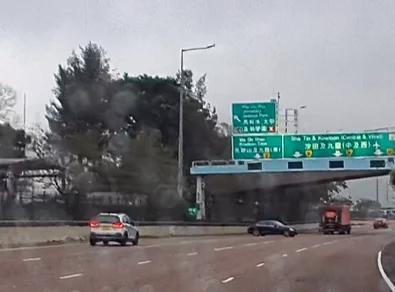
Recently, HK01 reported a shocking incident where a P-plate private car drove against traffic and made a U-turn across three lanes on the Tolo Highway, sparking heated online discussions about the consequences of dangerous driving. This article will explore how insurance compensation works if a traffic accident were caused by the involved P-plate driver.
Menu
In such severe traffic accidents, a critical but often overlooked question is: If the accident unfortunately results in the death of an innocent party, how is the life insurance compensation calculated? Will the insurance company sue the at-fault driver who committed dangerous driving?
How Much Does Life Insurance Pay in a Fatal Crash?
- Life Insurance: Pays out the full face value of the policy with no deductions.
- Insurer Recovery: The life insurance company will absolutely NOT seek recovery from the at-fault driver.
- Family Claims: The family can separately file a civil claim against the at-fault driver. The two sums are independent statutory rights and will never offset each other.
After a Fatal Crash, How is the Life Insurance Payout Calculated?
Many people mistakenly believe that insurance payouts for a fatal car crash are calculated based on the severity of the accident. This is actually a financial misconception.
Under Hong Kong insurance principles, life insurance is a "Non-Indemnity Contract". This means the value of human life cannot be measured in monetary terms. When an insured person passes away due to a traffic accident, the life insurance claims process settles the payout based strictly on the absolute figures stated in the policy terms.
As we discussed in our column regarding Face Value versus Cash Value, the insurance company will pay out the full "Guaranteed Death Benefit" plus the "Accumulated Dividend Face Value". This death benefit is a guaranteed cash amount. As long as the policy is in force and no fundamental contract terms (such as deliberate fraud) have been violated, the insurance company has an absolute legal obligation to pay it out in full to the beneficiaries.
Will the Life Insurance Company Seek Recovery from the At-Fault Driver?
This is the most frequently asked legal question: If an insurance company pays tens of millions to the family, will they turn around and sue the at-fault driver?
The answer is absolutely not. Legally, the "Right of Subrogation" does not apply to life insurance.
In general car insurance or medical insurance, the insurer can step into your shoes to sue the at-fault party after paying your claim. However, because the nature of life insurance is a fixed-sum contract, once the life insurance company pays the death benefit to the family, the claim case is closed. They have no legal right to seek recovery for this expenditure from the at-fault driver.
Can You Claim Both Life Insurance and Third-Party Liability Insurance After a Fatal Crash?
Yes. The family can receive both the life insurance payout and civil compensation simultaneously. The two will not offset each other whatsoever. This means the at-fault driver must face an overwhelming wave of legal and financial repercussions.
To clearly illustrate this, let's simulate the legal process using a real-world scenario of a fatal crash caused by dangerous driving:
- Step 1 (Life Insurance Claim): The victim's life insurance company immediately pays the family a death benefit of HK$ 5 million.
- Step 2 (Court Civil Claim): The family pursues legal action against the at-fault driver. The court orders the driver to pay HK$ 8 million in compensation (covering loss of future earnings, etc.). At this point, the court will not deduct the HK$ 8 million judgment just because the family has already received HK$ 5 million in life insurance.
💡Expert Legal Analysis: Why Doesn't the Court Deduct the Life Insurance Payout?
Many wonder, since the family already received HK$ 5 million, why doesn't the judge proportionally reduce the at-fault driver's compensation amount? This is based on explicit provisions in Section 9 of the Fatal Accidents Ordinance (Cap. 22) of Hong Kong: In assessing damages, the court shall not take into account any insurance money payable as a result of the death. This law ensures that the policy purchased by the deceased to protect their family will never become a "shield" to lighten the legal responsibilities of the at-fault driver.
- Step 3 (Third-Party Liability Insurance): By law, the at-fault driver's car insurance company must first advance this HK$ 8 million to the family.
- Step 4 (Insurer's Ultimate Recovery): If the court ultimately determines that the at-fault driver committed severe violations of the car insurance terms—such as drink driving, drug driving, or driving without a valid license—the car insurance company, after compensating the victim's family, will trigger the "Right of Recovery" mechanism to claim the entire HK$ 8 million back from the at-fault driver.
Regulatory Comparison: Life Insurance vs. Car Insurance
To help you grasp this complex legal and financial interplay at a glance, we have summarized the core differences in claim mechanisms and recovery liabilities between the victim (Life Insurance) and the at-fault driver (Car Insurance) in the table below:
Clear Policy Management is a Family's Strongest Backing
A sudden traffic accident highlights the fragility of risk management. The mechanism of life insurance ensures that in the worst-case scenario, resources are swiftly delivered to the family. However, the reality is that after an accident, families often do not even know what insurance the deceased had purchased.
If you are unclear about the face value of your life insurance policies, we strongly recommend referring to our policy consolidation and asset management guides. Through policy data management tools like InsurVault, you can systematically centralize the details and beneficiary information of all your insurance contracts. When a crisis strikes, this will be the clearest financial navigation you leave for your family.
Frequently Asked Questions in Hong Kong (Car Crashes and Insurance Claims)
Can I claim both life insurance and civil compensation after a fatal car crash?
Yes. The life insurance death benefit is an independent contract. After claiming the life insurance, the family retains the absolute right to file a civil claim against the at-fault driver. The two sums do not conflict legally and will not be offset against each other.
Does dangerous driving affect insurance claims?
It depends on the type of insurance. For the victim's "Life Insurance", as long as there is no breach of fundamental contract terms, the claim will be paid regardless of how the accident happened. However, for the at-fault driver's "Car Insurance" and "Third-Party Liability Insurance", dangerous driving that triggers specific exclusion clauses means the insurance company, after compensating the victim, is highly likely to seek full recovery from the at-fault driver.
What if the at-fault driver has no money to pay?
The Motor Vehicles Insurance (Third Party Risks) Ordinance (Cap. 272) provides immense protection for innocent victims. Even if the at-fault driver commits severe violations leading to policy invalidation, the law imposes a statutory duty on the insurer to satisfy the court judgment. The car insurance company must "advance payment first, seek recovery later" to the victim's family, and only then rely on the policy's Right of Recovery to pursue the driver for the debt. If the involved vehicle is entirely uninsured or a hit-and-run, the compensation fund of the Motor Insurers' Bureau of Hong Kong (MIB) will step in, ensuring the victim's family is not left without recourse.
Disclaimer: The information in this article is for reference only and does not constitute any form of insurance, legal, or investment advice. InsurVault is a third-party policy data management tool, not a licensed insurance intermediary or law firm. It does not directly connect with any insurance company's internal systems, nor does it participate in policy sales, claim approvals, or provide legal consultation. Regarding the right of subrogation for life insurance, car policy exclusions, recovery mechanisms, and legal liabilities for civil claims, please refer to the official documents, contract terms issued by the respective insurance companies, and final judgments by Hong Kong courts.
Ready to build a safety net for your family?
Download the InsurVault App today and easily manage your family's policies all in one place. Make love traceable.
Download for FREE